Do You Really Need an Annual Boiler Service? Here's Why It Matters

Your boiler might appear to be working perfectly, but that doesn't necessarily mean everything is operating as it should.
Regular boiler servicing allows a qualified engineer to check the condition, safety and performance of your heating system and identify potential problems before they develop into more serious faults.
This is particularly important before winter, when your boiler is likely to be working much harder. Booking a service in late summer or early autumn means you can address potential issues while your heating is still working, rather than waiting until a breakdown leaves you without heating or hot water.
In this guide, we'll explain why regular boiler servicing matters, what happens during a service, how often you should service your boiler, and what you need to know before booking an engineer.
In this article, we will explore the benefits of servicing your boiler annually and explain why it is critically important to keep on top of it.
Explore Domestic Boiler Servicing
Explore Commercial Boiler Servicing
Contents
- Do I Need To Service My Boiler Every Year?
- 5 Reasons To Have Your Boiler Serviced Every Year
- What Problems Can a Boiler Service Identify?
- What Does a Boiler Service Include?
- When Is the Best Time To Service Your Boiler?
- Is Boiler Servicing a Legal Requirement?
- Does Boiler Type Affect Servicing Requirements?
- How Much Does a Boiler Service Cost?
- How Long Does a Boiler Service Take?
- Who Should Service a Gas Boiler?
Do I Need To Service My Boiler Every Year?
Annual servicing is generally recommended for gas boilers, but you should always follow the servicing requirements provided by your boiler manufacturer. HSE advises homeowners to have gas appliances, flues, and pipework regularly maintained and serviced at least annually by a Gas Safe registered engineer.
Regular servicing can help identify developing faults, check that your boiler is operating safely and efficiently, and give you an opportunity to deal with problems before they result in a breakdown.
It can also be important if your boiler is covered by a manufacturer's warranty. Many manufacturers require evidence of regular servicing as a condition of their warranty, so check the terms that apply to your particular boiler.
5 Reasons To Have Your Boiler Serviced Every Year
1. Identify Problems Before They Become Breakdowns
Boilers contain multiple components that can deteriorate or develop faults over time. A service allows an engineer to identify signs of wear, leaks, corrosion, pressure problems or other issues before they result in a more serious failure.
A service cannot guarantee that your boiler will never break down, but identifying problems earlier can make it easier to address them before they leave you without heating or hot water.
2. Keep Your Boiler Operating Safely
Safety is one of the most important reasons to have a gas boiler serviced.
A qualified engineer can inspect the boiler and associated components and carry out appropriate safety and performance checks. This can help identify issues that could affect the safe operation of the appliance, including problems with combustion or the flue.
Carbon monoxide is particularly concerning because it is colourless, odourless, and highly poisonous. Using a suitably qualified Gas Safe-registered engineer for gas boiler servicing is therefore essential.
3. Maintain Efficient Performance
A boiler that isn't properly maintained may not perform as efficiently as it should.
Servicing allows the engineer to check the boiler's operation and identify issues that could affect performance. Keeping the system in good working order can help it continue to provide heating and hot water as intended.
Your engineer may also be able to provide advice on operating your heating system efficiently.
4. Help Protect Your Boiler Warranty
Your boiler's warranty may require you to have it serviced regularly.
The exact requirements vary between manufacturers and warranties, so don't assume that every boiler has identical servicing conditions. Check your warranty documentation and keep records of completed services in case you need to make a claim.
5. Reduce the Risk of Winter Problems
A boiler breakdown is inconvenient at any time of year, but losing your heating or hot water during a cold spell can be particularly disruptive.
Servicing your boiler before the colder months allows you to identify potential problems while the system is still working. It may also be easier to arrange a convenient appointment before demand increases during the winter.
For this reason, late summer and early autumn can be a good time to arrange your annual boiler service.
What Problems Can a Boiler Service Identify?
A boiler service isn't simply a quick visual check. Depending on the boiler and manufacturer's requirements, an engineer may identify a range of issues that could affect its safety or performance.
Low Pressure or Leaks
Low boiler pressure can affect heating performance, while leaks can cause damage and may indicate a problem with components, seals, or pipework. An engineer can inspect the system for visible signs of leaks and investigate pressure-related issues.
Dirty or Blocked Components
Dirt, deposits and other build-up can affect boiler components and restrict performance. Where appropriate, an engineer can clean serviceable components and identify anything that requires further attention.
Ignition or Burner Problems
Issues with ignition or burners can affect the boiler's ability to fire correctly and may cause intermittent heating or complete failure. These components can be inspected and tested as part of the service.
Worn or Corroded Components
Boiler components can deteriorate with age and use. Identifying worn seals, fans, pumps, or other components early can help you deal with developing problems before they result in a more significant breakdown.
Flue Problems
The flue is essential for safely removing combustion gases from the boiler. An engineer will check the flue and relevant ventilation arrangements as part of appropriate safety checks.
Sensor & Control Faults
Faulty sensors, thermostats or other controls can lead to inconsistent heating or affect how the boiler operates. Checking the controls can help identify issues that may otherwise go unnoticed.
What Does a Boiler Service Include?
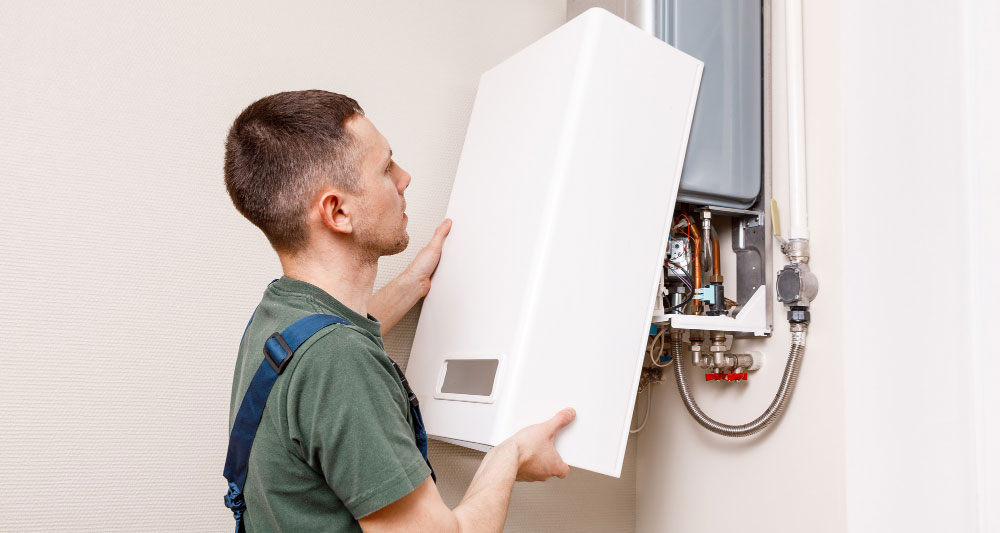
The exact checks carried out during a boiler service depend on the appliance, manufacturer instructions, and the engineer's findings. However, a typical service involves a combination of visual inspection, safety checks, performance testing, and maintenance.
Please note: This is a general overview, rather than GasWise’s specific approach. Please contact us to discuss how our own boiler servicing works.
1. Visual Inspection
The engineer will inspect the boiler and surrounding area for visible signs of damage, corrosion, or leaks. They will also consider the condition of relevant ventilation and flue arrangements.
2. Operation & Control Checks
The boiler is operated, and its controls and safety devices are checked to make sure they are functioning correctly.
3. Internal Component Checks
Where appropriate, the engineer will inspect relevant internal components and look for signs of dirt, wear, corrosion, or damage. Serviceable components may be cleaned where necessary.
4. Gas, Pressure, & Performance Checks
For gas boilers, the engineer can carry out appropriate gas and performance checks to confirm that the appliance is operating as it should.
5. Flue & Combustion Checks
An engineer can assess the flue and carry out appropriate combustion and emissions testing using specialist equipment, helping to identify issues that could affect safe operation.
6. Cleaning & Maintenance
Where required, serviceable components such as filters or condensate-related components may be cleaned or maintained. Any further repairs or replacement parts that are needed can then be discussed with you.
7. Final Checks & Service Record
Once the service is complete, the engineer will carry out the appropriate final operational and safety checks. You should also receive a record or report of the work carried out, depending on the service and appliance.
A typical boiler service takes around 40 minutes to an hour, although this varies depending on the boiler, its age, and its condition.
When Is the Best Time To Service Your Boiler?
Although servicing should be carried out according to the manufacturer's requirements, late summer or early autumn is often a sensible time to arrange your boiler service.
During the warmer months, your central heating may not be running as frequently. By arranging a service before winter, you have an opportunity to identify and address potential problems before your boiler is working harder to keep your home warm.
There is also a practical reason to avoid leaving it until the first cold snap: heating engineers can be in greater demand when boilers begin breaking down across the country.
In other words, don't wait for your boiler to stop working before thinking about maintenance.
Is Boiler Servicing a Legal Requirement?
Landlords have separate legal responsibilities for gas safety.
Landlords must arrange a gas safety check every 12 months on gas appliances and flues provided for tenants' use. The check must be carried out by a suitably qualified Gas Safe registered engineer, and the results must be recorded in a Landlord Gas Safety Record (often referred to as a CP12). Landlords must also provide the relevant gas safety record to tenants in line with the legal requirements.
It's important to understand that a boiler service and a landlord's annual gas safety check are not necessarily the same thing. HSE specifically advises landlords not to assume that an annual service inspection meets the gas safety check requirements, or that a gas safety check alone provides effective ongoing maintenance.
In practice, landlords may therefore need to arrange both regular boiler servicing and the annual gas safety check, depending on the appliance, manufacturer's requirements and their maintenance arrangements.
Learn about our landlord services
Does Boiler Type Affect Servicing Requirements?
Different boilers and fuel types have different components and servicing requirements, so your engineer should always follow the manufacturer's instructions for the appliance being serviced.
Gas Boilers
Gas boilers are the most common type found in UK homes. Servicing can include checks of the boiler's operation, combustion, controls, flue and relevant components.
Gas boiler work must be carried out by an appropriately qualified Gas Safe registered engineer.
Oil Boilers
Oil-fired boilers have different components and servicing requirements from gas boilers. Depending on the system, servicing may include checks and maintenance of components such as filters, burners, pumps and oil supply arrangements.
Make sure the engineer you use is appropriately qualified for oil-fired systems.
LPG Boilers
LPG boilers also require specialist attention. Gas Safe guidance recommends that fixed LPG appliances are serviced and safety checked annually by a suitably qualified Gas Safe registered engineer.
Combi, System, & Conventional Boilers
Combi, system and conventional boilers have different configurations and components, so the checks carried out during a service may vary.
For example, a system or conventional boiler may form part of a heating system that includes additional components such as a hot water cylinder. Your engineer should service the appliance in accordance with the manufacturer's instructions and the requirements of the individual system.
How Much Does a Boiler Service Cost?
The cost of a boiler service varies depending on factors such as the type of boiler, its condition, the engineer carrying out the work, and your location.
It's also important to distinguish between a boiler service and a boiler repair. A service is intended to inspect and maintain the appliance. If the engineer identifies a fault or a component that needs replacing, additional repair costs may apply.
When comparing prices, check what is included in the service and whether any follow-up work would be charged separately.
How Long Does a Boiler Service Take?
A standard boiler service will typically take around 40 minutes to an hour, although the exact time depends on the boiler, its condition, and the checks or maintenance required.
If an engineer identifies an issue that requires further investigation or repair, the appointment may take longer.
Who Should Service a Gas Boiler?
Gas boiler servicing should always be carried out by a suitably qualified Gas Safe registered engineer.
The Gas Safe Register is the official register for businesses and engineers authorised to carry out gas work, and you should make sure the engineer is qualified for the type of work they are carrying out.
At GasWise, all of our engineers are Gas Safe and OFTEC registered, allowing us to work with your gas, oil, or LPG heating system.
Book Your Boiler Service With GasWise
Don't wait for your boiler to break down before arranging a service.
At GasWise, our Gas Safe and OFTEC-registered engineers provide boiler servicing for gas, oil, and LPG systems across Oxfordshire and surrounding counties. Whether your boiler is due its annual service or you're simply unsure when it was last checked, we can inspect the system, identify potential issues, and explain any recommended work clearly.
Book your boiler service with GasWise today and get your heating system checked before the colder months arrive.
FAQs
-
How often should a boiler be serviced?
You should follow the manufacturer's servicing instructions for your particular boiler. HSE advises homeowners to have gas appliances, flues, and pipework regularly maintained and serviced at least annually by a Gas Safe registered engineer.
-
What happens if I don't service my boiler?
Skipping servicing can mean potential faults or maintenance issues go unnoticed. It may also affect your boiler warranty if regular servicing is one of its conditions. Regular servicing cannot guarantee that a boiler won't break down, but it can help identify developing issues before they become more serious.
-
Can a boiler service prevent a breakdown?
A service can't guarantee that your boiler will not break down. However, identifying worn components, leaks, pressure problems, and other developing faults can give you an opportunity to address them before they cause a larger failure.
-
Is a boiler service the same as a gas safety check?
No, a boiler service focuses on servicing and maintaining the appliance, while a landlord's annual gas safety check has specific legal requirements. HSE advises that neither should automatically be assumed to replace the other.
-
When should I have my boiler serviced?
You should follow the manufacturer's recommended servicing interval. From a practical perspective, late summer or early autumn can be a good time to arrange a service so potential problems can be identified before you begin relying heavily on your heating.
-
Do I need to service my boiler if it seems to be working normally?
Yes, regular servicing is still recommended. A boiler can appear to be working normally while developing issues that aren't immediately obvious. Routine servicing allows a qualified engineer to inspect the appliance and identify potential problems.


