Blocked Drains: Who Is Responsible for Repairs?

A blocked drain can quickly escalate from a minor inconvenience to a major expense. But before you call out an emergency plumber or start digging up your garden, you need to know one crucial thing: who is responsible for the repair - you, your landlord, or the water company?
✓ Inside your property boundary and serves only your home = Your responsibility
✓ Outside boundary or serves multiple properties = Usually water company
✓ Rental properties = Usually landlord (unless tenant caused blockage)
✓ Uncertain? = CCTV survey identifies exact location and ownership
The answer isn’t always straightforward. Drainage ownership rules changed significantly in 2011, and since then, many drains once considered private are now maintained by water companies, and getting it wrong can cost thousands in unnecessary repairs.
In 2024-25, water companies in England and Wales recorded nearly 56,000 sewer flooding incidents, including around 6,000 inside homes. Many property owners paid for repairs they weren't responsible for simply because they didn't understand where their responsibility ended, and the water company's began.
This article clarifies exactly who is responsible for blocked drains in different scenarios and shows how a CCTV drain survey can provide the evidence you need to avoid costly disputes.
Drainage Ownership - Who’s Responsible?
The rules changed significantly in 2011 when water companies took over responsibility for shared and lateral drains. Here's how drainage ownership breaks down:
| Type of Drain | Responsibility | Examples of issues |
|---|---|---|
| Private drain (inside your boundary, serves only your property) | Homeowner | Garden drains, gullies, inspection chambers, leaks, blockages |
| Shared drains/lateral drains (serving multiple properties or runs outside your boundary) | Water company (post 2011) | Drains serving multiple properties, tree root intrusion, flooding |
| Public sewer, pumping stations | Water company | Blockages, structural damage, environmental risk |
The key date is October 2011. Before this, if your drain served multiple properties or ran outside your boundary, you might have been responsible. Since then, that responsibility transferred to your water company.
Who’s Liable in Different Situations?
Blocked Drains Outside
If the blockage is outside your property boundary, it's usually the water company's responsibility. This includes lateral drains, the pipes connecting your property to the public sewer, even if they run under your land.
The water company is obligated to maintain these drains and respond to issues. You shouldn't be paying for repairs to pipework that serves the public sewer system.
Not sure where your boundary is?
Our CCTV drain survey maps your entire drainage system and clarifies exactly where responsibility lies.
Blocked Sewer Drain
There's an important distinction between private drains (which only serve your property) and public sewers (which serve multiple properties or the wider area).
Since the 2011 regulations, most shared drainage became the water company's responsibility. If your sewer drain connects to or is part of a system serving other properties, the water company should handle it.
Avoid paying for water company repairs; get professional verification first. Request a quote for a drainage investigation.
Tenant or Landlord - Where Do You Stand?
Under the Landlord and Tenant Act 1985, landlords are responsible for maintaining drains and sanitary installations. This includes keeping drainage systems in proper working order.
- If You're a Tenant: Report drainage issues to your landlord immediately. They're obligated to arrange repairs unless you caused the blockage through misuse.
- If You're a Landlord: You're liable for drainage maintenance. Ignoring problems can lead to property damage, legal disputes, and compliance breaches. Our property management drainage package includes regular inspections and emergency response.
Drainage Services for Landlords
Shared Drain Problems
If a drain serves multiple properties, the water company is responsible. However, disputes can arise when ownership is unclear or when neighbours disagree about who should pay.
Shared drain disputes require evidence. A CCTV survey provides clear visual proof of where the problem is located, who owns that section, and what's causing the issue.
Example Scenarios
| Private drain leak inside your property = Your responsibility as the homeowner |
Collapsed lateral drain outside your boundary = Water company's responsibility |
| Garden drain affecting your neighbours = Likely shared responsibility (water company) |
Commercial premises drainage = Check trade effluent agreements and water company guidance |
Unsure what the cause of your drainage issues is?
Using CCTV and Drain Mapping Surveys
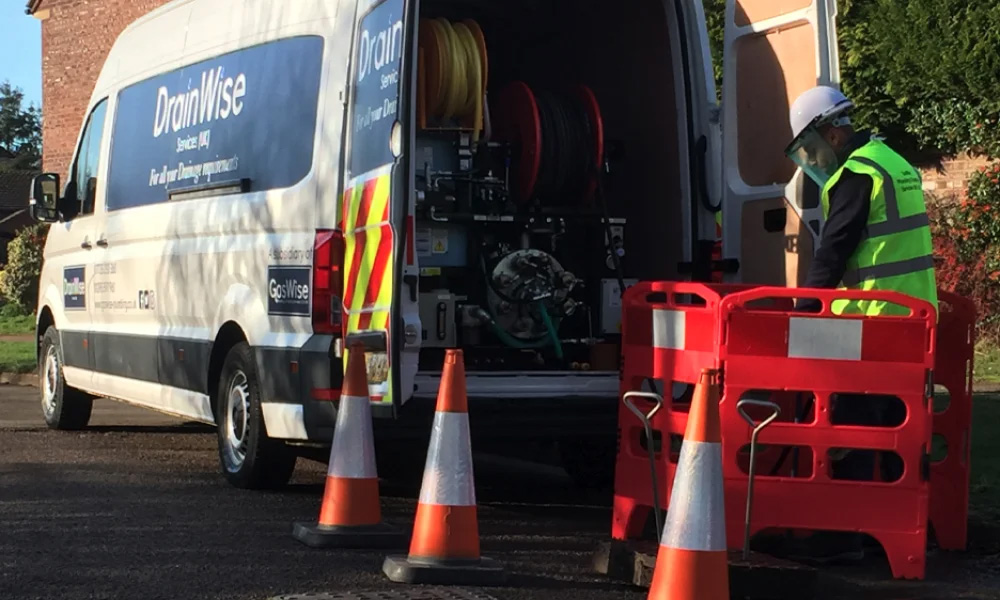
CCTV drain surveys and drain mapping are essential tools for avoiding unnecessary repair costs and legal disputes. GasWise uses specialist cameras to provide a detailed view inside your drainage system, identify blockages, and clarify ownership.
When Responsibility is Unclear
If you're uncertain who's responsible for a drainage problem, take these steps:
- Check your property deeds for drainage plans and boundary information
- Contact your local water authority for sewer maps and records
- Conduct a CCTV survey to identify the exact location and cause of the problem
- Review the Landlord and Tenant Act 1985 if you're renting
- Check your insurance policy for drainage cover and claims procedures
Not sure who's responsible? Let our experts investigate and provide evidence for insurance or legal claims.
Need Expert Drainage Solutions?
At GasWise, we offer a wide range of professional drainage services tailored to your home or business.
Our expert team provides professional solutions for both residential and commercial properties, helping you avoid unnecessary costs, resolve disputes efficiently, and safeguard your home or business before problems escalate.
FAQs
-
Who is responsible for repairing drains on my property?
If the drain only serves your property and is within your boundary, you're responsible. If it serves multiple properties or is outside your boundary, it's usually the water company.
-
How do I know if a drainage problem is my responsibility or the water company's?
Check where the problem is located and whether the drain serves other properties. A CCTV survey provides definitive answers.
-
What is the difference between private, shared, lateral drains, and public sewers?
Private drains serve only your property. Shared and lateral drains serve multiple properties or connect to public sewers, which have usually been the water company’s responsibility since 2011. Public sewers serve entire areas and are maintained by water companies. See Citizens Advice for further information.
-
If multiple properties are affected by a blocked drain, who should I contact?
Contact your water company. Drains serving multiple properties are their responsibility.
-
What should I do if a drain in my garden affects neighbours?
This is likely a shared drain. Contact your water company and consider a CCTV survey to clarify responsibility.
-
How can I find out if a drain or sewer is shared or privately owned?
Request sewer maps from your water company or conduct a CCTV drain mapping survey.
-
Can the water company take over responsibility for a private drain or sewer?
Since 2011, most shared and lateral drains have become the water company's responsibility. Private drains that only serve your property remain your responsibility.
-
I am a tenant. What should I do if drains are blocked or leaking?
Report the issue to your landlord immediately. They're legally responsible for maintenance under the Landlord and Tenant Act 1985.
-
Does home insurance cover blocked or damaged drains?
Some policies include drainage cover, but many don't. Check your policy and consider adding drainage insurance if not covered.
-
How quickly will the water company respond to a blockage or leak on public drains?
Response times vary, but water companies are obligated to respond to flooding risks and public health issues. Professional evidence can help expedite the process.


