Drain Jetting vs Rodding: Which Method Is Best for Blocked Drains?

Blocked drains can create immediate operational and financial issues, whether it’s a flooded kitchen, toilets backing up, or wastewater seeping into your property. Water companies in England and Wales handle nearly 280,000 blockages each year, with over 460,000 untreated sewage discharges in 2023, highlighting just how quickly minor issues can escalate.
There are two common fixes to a blocked drain: drain jetting and manual rodding. The decision between these can be the difference between a short-term fix and a long-lasting resolution, helping you avoid repeat blockages and save hundreds – or even thousands – of pounds in unnecessary repairs and disruption. This article breaks down how each method works and helps you determine which option is best suited to your situation.
Drain Jetting Service Solutions
Drain Jetting vs Rodding: Quick Comparison
| Feature | Drain Jetting | Manual Rodding |
|---|---|---|
| Effectiveness | Cleans entire pipe circumference; removes grease, roots, scale, debris | Dislodges immediate blockage only; pipe walls remain uncleaned |
| Cost | £150–£300; higher upfront but reduces repeat issues | £120–£150; lower upfront cost, but may require repeat visits |
| Speed | 2–4 hours Including CCTV survey | 1–2 hours for minor clogs, slower for severe blockages |
| Blockages Types | Best for: Grease, tree roots, scale, compacted debris, broken drains | Best for: Hair clogs, small debris, simple blockages |
| Pipe Safety | Safe with professionals; check old pipes | Generally safe for older pipes when gentle |
| Environmental Impact | Eco-friendly; water only | Neutral; mechanical, may need chemicals if ineffective |
| Prevention Value | Reduces future blockages 60–80% | Immediate solution only |
| Best Use Case | Commercial, preventative, severe blockages | Minor domestic clogs, budget-conscious solutions |
What is Drain Rodding?
Manual drain rodding uses flexible rods inserted into drains to physically clear blockages. It’s fully mechanical, no water or chemicals, making it ideal for older or fragile pipes, or locations with limited water supply.
How it works:
Technicians feed rods into the blocked drain, twisting and pushing to dislodge debris. Attachments can be added depending on the blockage type.
Pros
- Affordable: Drain rodding cost typically £50–£150.
- Quick deployment: Usually 1–2 hours for minor clogs.
- Minimal equipment needed: Only rods and basic drain cleaning equipment.
- Safe for older pipes when used correctly.
Cons
- Only clears the immediate blockage, leaving grease, scale, and roots behind.
- Not a long-term solution; repeat blockages are common.
- Limited reach for long or complex drains.
- No diagnostic value; potential for pipe damage if used incorrectly.
What is Drain Jetting?
Also called high-pressure water jetting or hydro-jetting, this method uses water at up to 4,000 PSI to clear blockages and clean the entire pipe circumference.
How it works:
A specialised jetting unit pumps water through a reinforced hose. Rear-facing jets propel the nozzle forward, while forward-facing jets break up debris. Jobs typically take 2–4 hours, including a CCTV survey to locate and verify blockages.
Pros
- Highly effective: Removes grease, scale, roots, and compacted debris.
- Thorough cleaning: Cleans the full pipe circumference, preventing recurring issues.
- Extended reach: Works for complex drain networks and commercial properties.
- Preventative value: Regular jetting reduces future blockages by 60–80%.
- Environmentally friendly: Uses water only, no chemicals.
Cons
- Higher cost: £150–£300 depending on blockage and survey requirements.
- Requires a water supply and trained operators.
- Old or brittle pipes may need assessment before jetting.
When to Choose Rodding vs Jetting
Best for Manual Rodding
- Small, localised blockages (hair, minor toilet clogs).
- Older or fragile pipe systems.
- Budget-conscious solutions.
- Locations with limited access or no water supply.
Best for Drain Jetting
- Recurring or stubborn blockages (grease, fat, tree roots, scale).
- Commercial properties with costly downtime.
Long, complex drainage systems. - Preventative maintenance and long-term cost savings.
Tip: Rodding may be slightly quicker for minor clogs, but jetting often solves the problem completely in one visit, saving time and money in the long run.
Not sure which solution is right for your drain? Book a professional Gaswise drainage survey and let our experts identify the cause and deliver the most effective, long-lasting fix.
Why Combine CCTV Surveys with Drain Jetting?
"You can’t fix what you can’t see." A CCTV survey gives you a clear view of what’s happening inside your pipes, and this clarity turns guesswork into targeted action. There are numerous benefits to this; the service is ultimately faster, cheaper, less disruptive, and far more defensible!
CCTV surveys provide accurate diagnostics and document drainage conditions for:
- Precise problem location
- Insurance or compliance evidence
- Avoiding unnecessary excavation (drain repair without excavation)
- Pre- and post-jetting verification
The Typical 3-Step Process for Drain Blockages:
Most professional drainage companies follow a broadly similar approach to diagnosing and resolving blockages, using a structured process designed to ensure the issue is accurately identified and thoroughly cleared. Here’s how it often looks:
- Survey: A CCTV drain inspection is carried out first to identify the exact cause, location, and severity of the blockage. This inspection reveals whether the issue is caused by grease build-up, dirt, root ingress, scale, or structural defects, ensuring the correct cleaning approach is selected from the outset.
- Clean: Once the problem is clearly understood, high-pressure water jetting is used to safely and thoroughly remove the obstruction. Unlike surface-level clearing methods, jetting cleans the full internal diameter of the pipe, flushing away accumulated dirt and restoring flow without damaging the drainage system.
- Verify: A second CCTV inspection is conducted after jetting to confirm the blockage has been completely removed and the pipework is flowing freely. This final check also highlights any underlying damage or maintenance issues, providing reassurance that the problem has been properly resolved.
Learn More About CCTV Drain Surveys
Emergency Drainage Situations
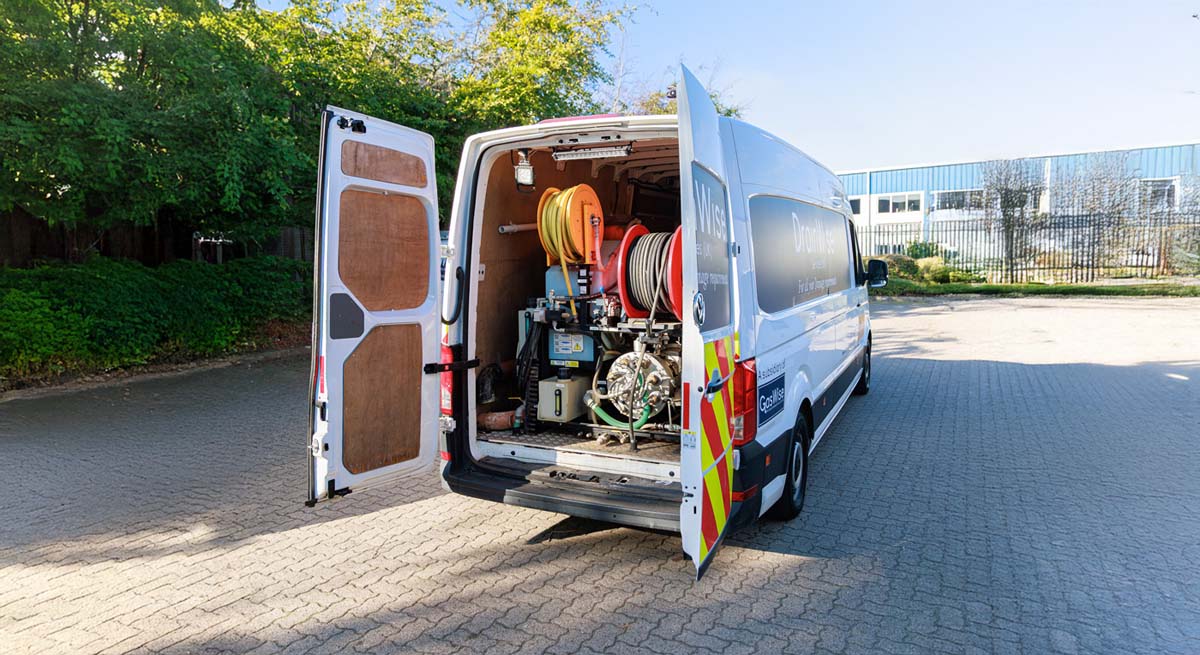
For urgent drainage problems, speed is essential, but effectiveness prevents repeat call-outs. Manual rodding can be the quickest solution for simple clogs, while high-pressure jetting provides a deeper, longer-lasting clean by removing grease and dirt build-up from the full pipe diameter.
GasWise offers 24/7 emergency drain unblocking, with experts equipped for both rodding and jetting. This allows on-site assessment and the right solution to be applied immediately, delivering a fast response with the option of a permanent fix.
Emergency Drain Unblocking Services
Need Professional Help?
GasWise offers expert drain jetting, rodding, and CCTV surveys for domestic and commercial clients, with 24/7 emergency response across Banbury, Warwick, and the surrounding areas. Contact us today to find the best resolution for any of your drainage worries, and we’ll arrange a suitable time to get started.
FAQs
-
Which is better: drain jetting or rodding?
For simple, localised blockages, rodding is cost-effective. For recurring blockages, grease, tree roots, or preventative maintenance, drain jetting is more effective as it cleans the entire pipe and prevents future issues.
-
Can manual rodding clear tree roots?
Rodding may temporarily break minor roots but is rarely effective for established growth. High-pressure jetting, especially with root-cutting nozzles, is far more reliable.
-
How quickly can GasWise respond to an emergency blockage?
We offer 24/7 emergency drain unblocking in areas such as Banbury, Bicester, Warwick, Leamington Spa, and other nearby towns. We aim to arrive within 1–2 hours, equipped with both rodding and jetting tools.
-
Is high-pressure jetting safe for older drains?
Yes, when operated by professionals. A CCTV survey checks the pipe condition first. If pipes are brittle, we adjust pressure or recommend alternatives to prevent damage.
-
Can jetting prevent future blockages?
Yes. Regular jetting removes grease, scale, debris, and early root intrusion, reducing future blockages by 60–80%. Many commercial properties use quarterly or bi-annual schedules.
-
How much does a jetting service cost?
Drain jetting typically costs £150–£300, depending on blockage severity and access. While higher than rodding (£120–£150), it solves the problem fully and reduces repeat callouts.


